
What is the National Prevention Learning Collaborative?
The National Prevention Learning Collaborative is a peer-to-peer learning community for people working to prevent youth homelessness.
It’s a space to share the policies, programs, and practices that are helping young people stay housed before a crisis becomes homelessness. By learning from local successes, communities can adapt what works, build stronger prevention systems, and push for the national policy changes needed to make prevention more effective and equitable for every young person.
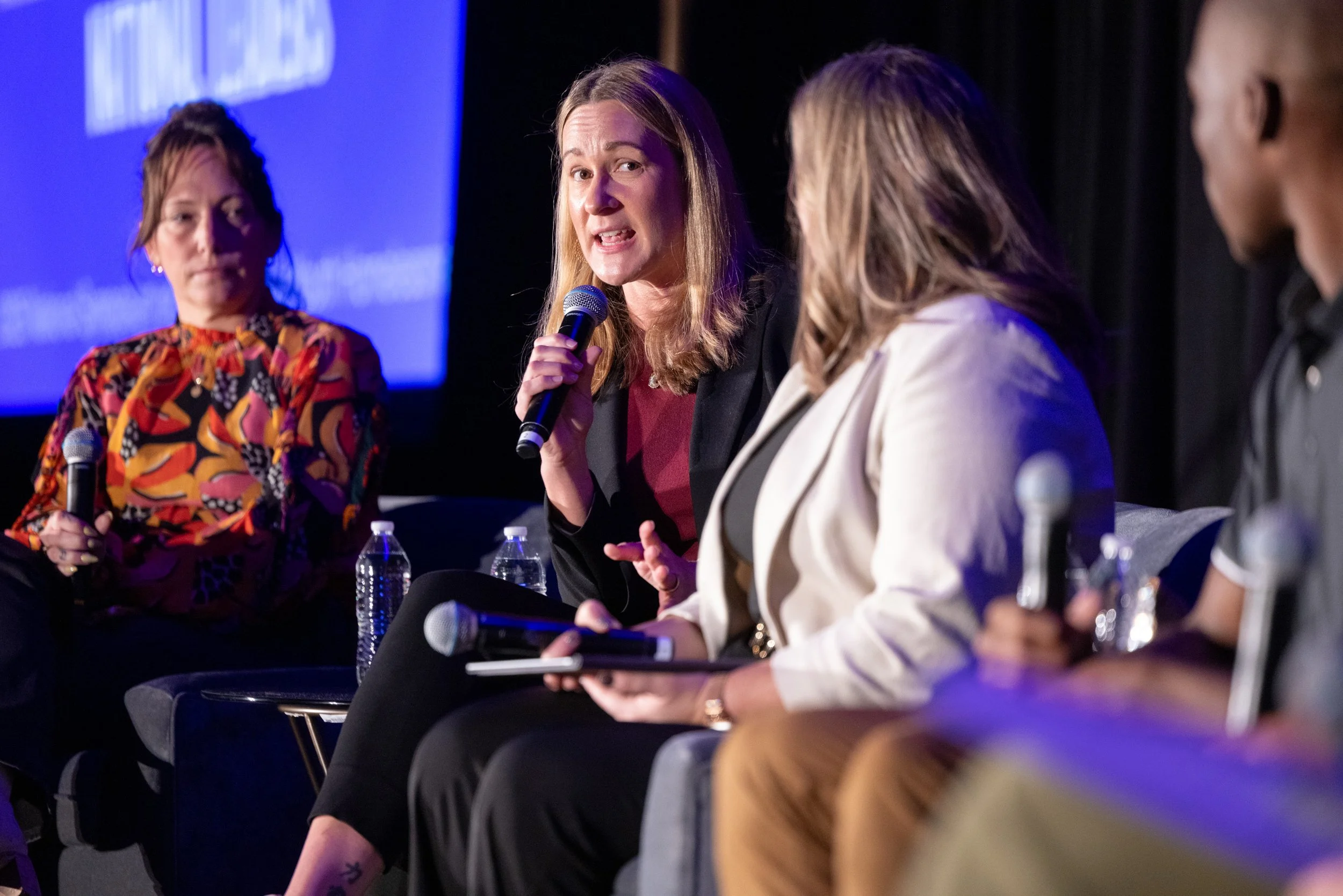

During the PSY National Symposium in Baltimore, a session on bold prevention strategies from local and national leaders featured (from left) Bree Torres, Lifeworks; Christina Miller, Conrad N. Hilton Foundation; Lauren Gamelin VanKeulen, AYA Youth Collective; and Eyan Johnson, Youth Empowered Society.
What Prevention Looks Like in Practice
When NPLC launched in 2024, we defined four Prevention Priorities to inform our events and resources.
Building on these four priorities, NPLC launched the webinar series in 2025 bringing together policymakers, young people with lived expertise, nonprofit staff and leaders, and funders. Each session surfaces what communities are actually doing, and what the rest of the field can learn from it.
Learn more about each Prevention Priority and watch related webinars in the dropdown. →
OUR CORE PREVENTION PRIORITIES
-
Young people with lived experience should help shape the systems meant to serve them. NPLC highlights communities that create sustainable peer roles and advance policy change alongside young people who have navigated these systems.
-
Preventing youth homelessness takes coordination across systems. NPLC spotlights models that bring federal, state, and local partners together — from statewide councils to stronger cross-community learning.
-
Many young people become homeless after leaving systems like foster care, juvenile justice, or behavioral health care. NPLC highlights approaches that help agencies work together so young people have stable housing and support before and after they exit care.
-
Strong relationships can be one of the best forms of prevention. NPLC features programs that help young people stay connected to family, chosen family, and other trusted supports — keeping households stable and strengthening long-term housing security.
Where We’re Going Deeper
We are now focusing our attention around two areas that the NPLC community felt needed urgent attention:
Helping young people build stronger permanent connections
Better supporting youth leaving foster care. We will build resources to support these learning tracks in the coming months.
LEARNING TRACK #1
Permanent Connections and
Natural Supports
Despite growing attention to the importance of belonging and connection, the field still has much to learn about how to increase permanent connections for young people in meaningful and lasting ways. This learning track will bring together invited communities to share what is working like flexible financial assistance, surface challenges, and build a stronger collective understanding of how natural supports can serve as a foundation for long-term stability.
LEARNING TRACK #2
Preventing Homelessness for Youth Exiting Foster Care
Youth aging out of or exiting foster care face a disproportionate risk of homelessness, yet too many communities lack coordinated strategies to support them at this critical transition point. This learning track will convene invited communities to explore promising practices, like flexible financial assistance, identify gaps, and strengthen the field's ability to prevent homelessness for this population before it occurs.