Published on April 30, 2026
Today We Made Headlines: Direct Cash Works
Johns Hopkins researchers found that Point Source Youth’s 7-state direct cash pilot helped young people facing housing crises stay housed and avoid shelter entry months after a one-time payment.
By Point Source Youth • April 30, 2026
For years, Point Source Youth has been building — and testing — a simple idea: if a young person is on the edge of homelessness, the most effective help is the most direct. Ask what they need to stay housed. Make a plan with them. And then fund it — quickly.
Our 7-state pilot put that approach into practice, and now researchers at the Johns Hopkins Bloomberg School of Public Health have the results: a one-time direct cash payment helped young people stay housed months after the money went out.
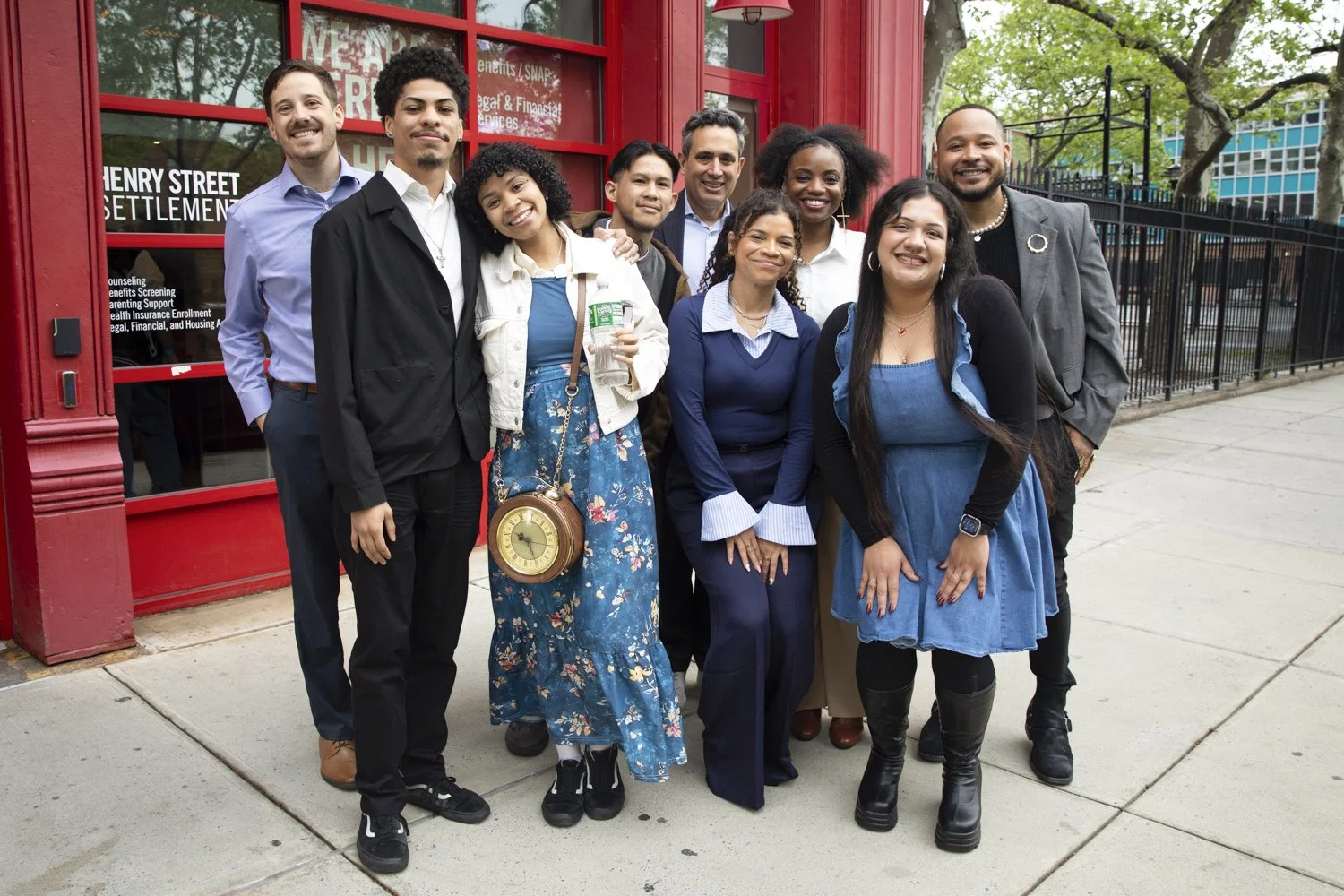
PSY staff, direct cash recipients, and a PSY youth consultant gathered outside Henry Street Settlement where press conference was held.
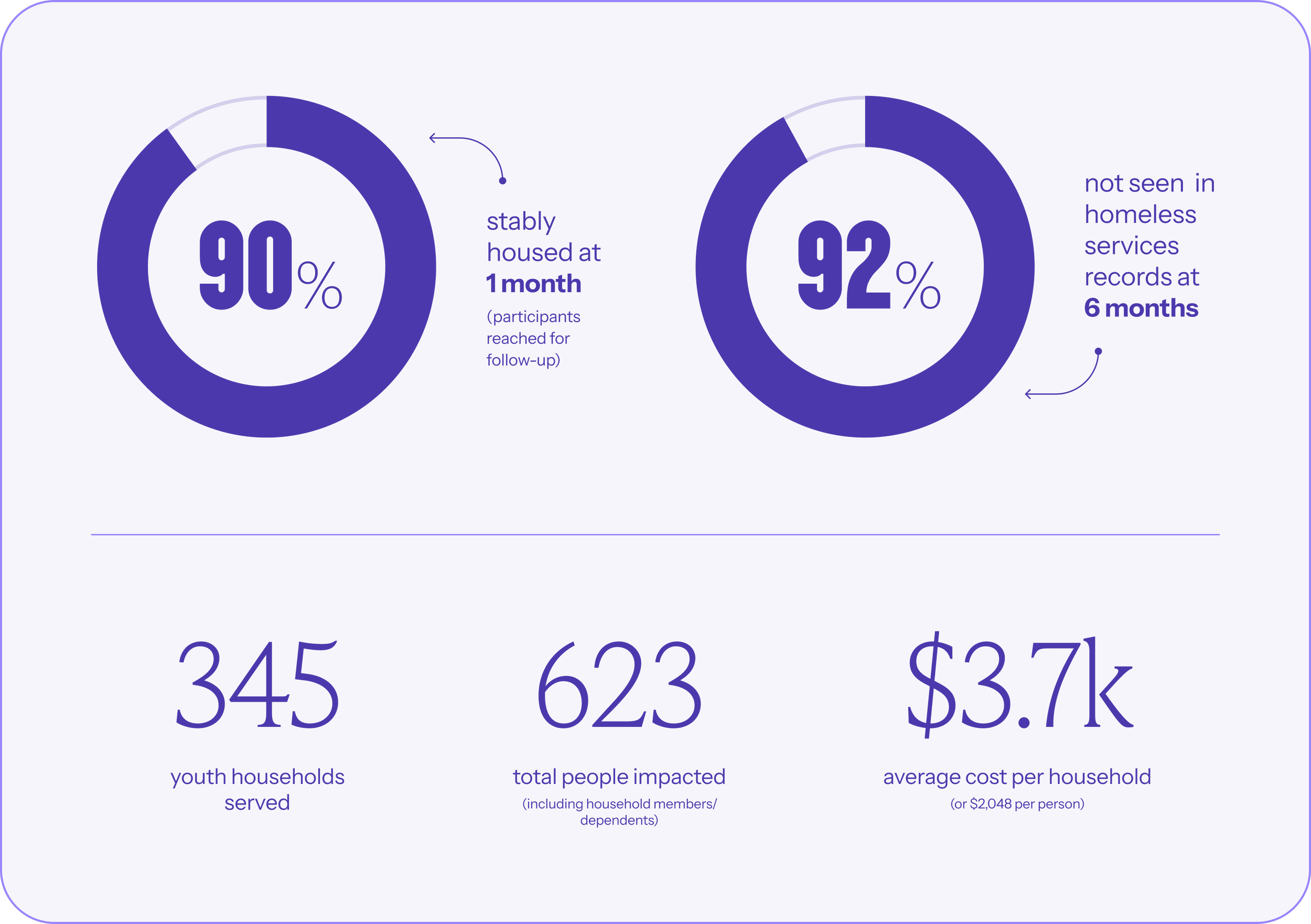
Through our direct cash program, trusted local partners in Arizona, California, Georgia, Michigan, New York, Oregon, and Texas worked with young people facing a housing crisis to create a plan to stay housed — and then provided a one-time cash payment to help make that plan possible. Between May 2024 and May 2025, the program reached 345 young people and their households, supporting 623 people in total, at an average cost of $3,700 per household or $2,048 per person.
Johns Hopkins found that 90% of recipients reached for follow-up reported being stably housed at 1 month. Homelessness-services system records show that 98% did not access homelessness services within three months of receiving the support, and 92% within six months.(1)
Here’s what stands out: direct cash is helping young people stay housed before they ever enter the homelessness system. That’s why we’re expanding existing programs in California, New York, Michigan, and Oregon, and launching new ones in Hawai‘i, Maine, Maryland, North Carolina, and Oklahoma.
(1) In New York, Henry Street Settlement received 90- and 180-day Department of Homeless Services (DHS) shelter data, while comparable data were not available for The Door. For both providers, the Department of Youth and Community Development (DYCD) compiled homelessness-services engagement data and shared aggregate 90- and 180-day percentages with the providers and study team.